Index
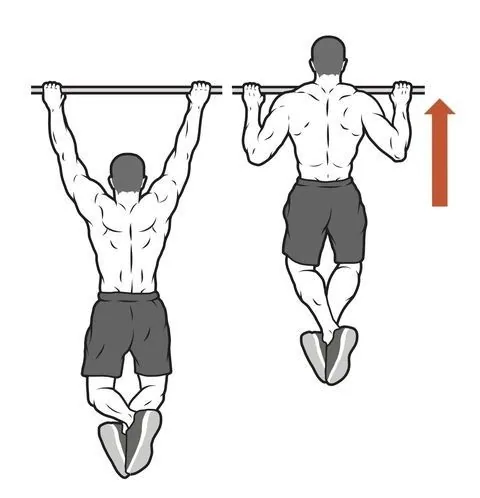
If you've been stuck at the same number of pull-ups for weeks, you're probably training too hard and too rarely. The fix sounds backwards: do less effort per session, but many more times a day. That's exactly what the Grease the Groove (GtG) method proposes, popularized by Russian coach Pavel Tsatsouline.
What Grease the Groove Is
The core idea is simple: strength is a skill, not just a muscle. And skills improve by practicing them frequently, without ever reaching fatigue.
Instead of doing 4 sets to failure twice a week, with GtG you do short, easy sets spread throughout the day, every day. Each set stays far from failure: if your max is 10 pull-ups, you'd do sets of 4 or 5. Fresh, clean, no shaking.
The golden rule: finish every set feeling like you could have done double.
The name comes from the idea of "greasing the groove": every clean rep polishes the motor pattern a little more, like a path that gets clearer the more you walk it. What you're training isn't so much the muscle as the efficiency with which your brain recruits it.
Why It Works
- More motor-pattern practice. Your nervous system "grooves" the pull-up movement dozens of times a week, making it far more efficient.
- Zero accumulated fatigue. By staying away from failure, you recover between sets in minutes, not days. You can train daily without burning out.
- Huge total volume. 6 sets of 5 pull-ups across the day is 30 reps daily. In a week, 210 — far more than you'd ever do training to failure.
- Adherence. Doing 5 pull-ups as you walk past the bar takes no willpower and no warm-up. It's almost free.
There's a fourth, less obvious effect: it removes your fear of the bar. When every set is easy, you stop associating pull-ups with suffering, and that makes you do more of them. Most plateaus aren't physiological, they're consistency problems.
How to Apply It Step by Step
- Find your max (RM). Do one set to failure on a single day to learn your ceiling. Say it's 10.
- Work at 40-60% of that max. In the example, sets of 4-6 reps.
- Spread 3-6 sets across the day. Morning, noon, afternoon, evening. Whenever you pass the bar.
- Rest plenty between sets. At least 1-2 hours. Never chain sets while fatigued.
- Stay consistent for 4-6 weeks. Then re-test your max. Most people add 2-4 clean reps.
A Real GtG Day
| Time | Set | How it should feel |
|---|---|---|
| On waking | 4 pull-ups | Stiff to start, but clean reps |
| Mid-morning | 5 pull-ups | Easy |
| After lunch | 5 pull-ups | Easy |
| Mid-afternoon | 4-5 pull-ups | Easy |
| Before dinner | 4 pull-ups | You notice the day, not fatigue |
Total: 22-23 reps a day without a single hard set. If one set genuinely feels heavy, drop a rep from the rest of the day: in GtG the adjustment goes down, never up.
A 6-Week Plan
| Week | Sets/day | Reps per set (max 10) | Note |
|---|---|---|---|
| 1 | 3 | 4 | Build the habit, don't push |
| 2 | 4 | 4 | Add a set, not reps |
| 3 | 4 | 5 | First intensity bump |
| 4 | 5 | 5 | Highest volume week |
| 5 | 5 | 5-6 | Still nowhere near failure |
| 6 | 3 | 4 | Deload: cut volume before testing |
At the end of week 6, rest 48 hours and re-test your max. That deload week is what turns accumulated work into a better number: test tired and the test lies.
When NOT to Use Grease the Groove
GtG isn't universal. It's a bad idea if:
- You can't do a full pull-up yet. GtG needs you to manage several clean reps so you can work at 40-60%. From zero, you need a structured progression first, like the 8-week pull-up program or the ultimate pull-up guide.
- Your elbow or forearm hurts. Daily frequency is exactly what an irritated tendon won't tolerate (elbow and forearm pain from pull-ups).
- You already run a hard pulling program. Stacking GtG on top of 4 weekly back sessions isn't frequency, it's overtraining in disguise.
- You don't have an accessible bar. Without constant access, the method doesn't exist.
The 4 Mistakes That Ruin the Method
- Setting the percentage too high. Sets at 80% of your max leave fatigue behind; four days later you're dragging. When in doubt, drop a rep.
- Chaining sets. Two sets with 3 minutes of rest is a normal session, not GtG. Respect the hours between sets.
- Testing your max every week. Every test to failure adds fatigue and breaks the logic of the method. Test at the start and at the end, that's it.
- Doing it forever. After 6-8 weeks the effect flattens out. Alternate GtG blocks with structured training blocks.
GtG Isn't Only for Pull-Ups
The method works with any exercise you already own technically and can do without setting anything up:
- Push-ups: sets of 8-12 if your max is 25-30.
- Parallel bar dips: perfect if you have bars at home.
- Pistol squats: GtG shines here, because it's more skill than strength.
- Dead hangs: 20-30 seconds several times a day builds grip, which is the bottleneck for many people.
What doesn't fit well is highly fatiguing or technical work under load (heavy barbell sets, for example): the "no fatigue" premise stops holding.
How to Combine It with a Normal Program
You don't have to choose. Two combinations that work:
- GtG as its own block: 6 weeks of GtG only, with no pulling sessions to failure. It's the pure version and usually the one that raises your max the most.
- GtG on rest days: if you follow a structured program, add 2-3 very easy sets on the days you don't train. It adds practice without stealing recovery.
What doesn't work is doing GtG on the same days as your hard back session: you end up accumulating exactly the fatigue the method tries to avoid. And respect your rest between sets in structured sessions: the method is "low fatigue", not "no structure".
Realistic Expectations
Starting from a max of 8-12 pull-ups, six weeks of well-executed GtG usually gives you 2-4 more reps. From 3-5, the relative improvement is bigger (you may double it). And if you're already at 20, expect 1-2: the more trained you are, the more expensive each point gets.
What almost always improves before the number does is quality: less swinging, better range, a cleaner pull. That's exactly the "greased groove" the method is named after — and it's also why many stuck lifters don't need more effort, just a different distribution.
The Perfect Companion: a Bar at Home
GtG lives or dies by accessibility. If you have to drive to the gym, you won't do 6 scattered sets a day. A pull-up bar in a doorway makes the method effortless: 5 pull-ups every time you enter or leave the room.
Why Reppy and Grease the Groove Are Soulmates
Here's the key. Most fitness apps are built for one long, structured session. Reppy isn't. Reppy is designed precisely for that sporadic gesture: open the app, log 5 pull-ups in two seconds, and get on with your life.
And every one of those mini-sets genuinely counts:
- Earns XP and levels up your RPG attributes (Strength and Endurance) on every log, however small.
- Keeps your streak alive. GtG is a daily method, and Reppy's streak rewards exactly that consistency.
- Deals damage to the community boss. Those 5 afternoon pull-ups turn into real damage against the season's boss.
- Hooks you into coming back. The loop of "open, log a few, gain progress" is the exact behavior GtG needs to work.
In other words: Reppy turns the invisible discipline of Grease the Groove into visible, gamified progress. Every time you pass the bar, you don't just train — you level up.
Frequently Asked Questions
How many days a week? All of them, that's the point. Missing one day is fine, but the method needs frequency; three scattered days is just a badly run normal program.
Can I do GtG without testing my max? Yes: start with sets that clearly leave you with margin and adjust from there. Erring too easy beats erring too hard.
What if I can only fit one set some days? Do it. One easy set keeps the habit and the pattern alive. The method punishes fatigue, not the occasional short day.
Does it work if I train at a gym and have no bar at home? Worse, but yes: spread the sets inside your session with 10-15 minutes between them, and use any bar you come across during the day.
Will it make me gain or lose weight? Neither on its own. What it does is add a lot of weekly work volume without fatigue, which helps if you also handle your nutrition.
How long should a block last? 4-6 weeks, 8 at most. After that, test and change the stimulus before the method runs dry.
Summary
| Classic training | Grease the Groove |
|---|---|
| Sets to failure | Easy sets, far from failure |
| 2-3 days/week | Every day |
| High fatigue | Zero accumulated fatigue |
| Requires willpower | Almost automatic |
If you want to break your pull-up ceiling without grinding yourself down, stop chasing the perfect set and start stacking easy ones. Put a bar where you'll see it, log every mini-set in Reppy, and let frequency do the work.