Index
Elbow pain when doing pull-ups is one of the most frequent problems among calisthenics athletes. You've felt it: a sharp pain on the inner elbow, forearm tension, or a dull ache that appears after your sets. Left untreated, it can become an injury that keeps you off the bar for weeks or months.
This guide explains practically why it hurts, how to identify the cause, and what to do to fix it.
Disclaimer: this is general training information, not a diagnosis. If the pain is severe, isn't improving, or comes with swelling or tingling, get seen by a physiotherapist or a sports doctor.
Why Does Your Elbow or Forearm Hurt Doing Pull-Ups?
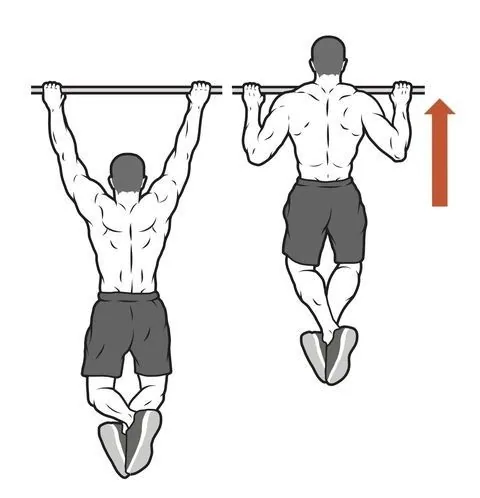
Pull-ups are a vertical pulling movement that primarily loads the elbows, forearms, and wrists. Pain can originate in several structures:
1. Medial Epicondylitis ("Golfer's Elbow")
Pain on the inner elbow (medial epicondyle). The most common cause of pull-up pain. Affects the tendons of the forearm flexors and pronator teres.
Symptoms: pain when closing the fist, flexing the wrist downward, or hanging from the bar in the first seconds of loading.
2. Distal Biceps Tendinitis
Inflammation of the biceps tendon where it inserts at the elbow. Produces pain at the front of the elbow, especially in the eccentric (lowering) phase of the pull-up.
Symptoms: pain when supinating (turning the palm up), weakness under load.
3. Pronator Teres Syndrome
Compression of the median nerve in the forearm. Produces tingling, numbness, or diffuse forearm pain that can be mistaken for tendinitis.
4. Volume Overload
Not an injury per se, but the signal that connective tissue (tendons) hasn't adapted to the training pace. Tendons take longer to adapt than muscles.
The #1 cause of elbow pain in beginners: too many pull-ups too soon.
5. Poor Grip
A grip that's too closed (thumb wrapped around the fingers instead of staying outside) creates unnecessary tension in the forearm flexors.
How to Identify Exactly Where It Hurts
| Pain Location | Likely Cause |
|---|---|
| Inner elbow | Medial epicondylitis |
| Front of the elbow | Biceps tendon |
| Outer elbow | Lateral epicondylitis |
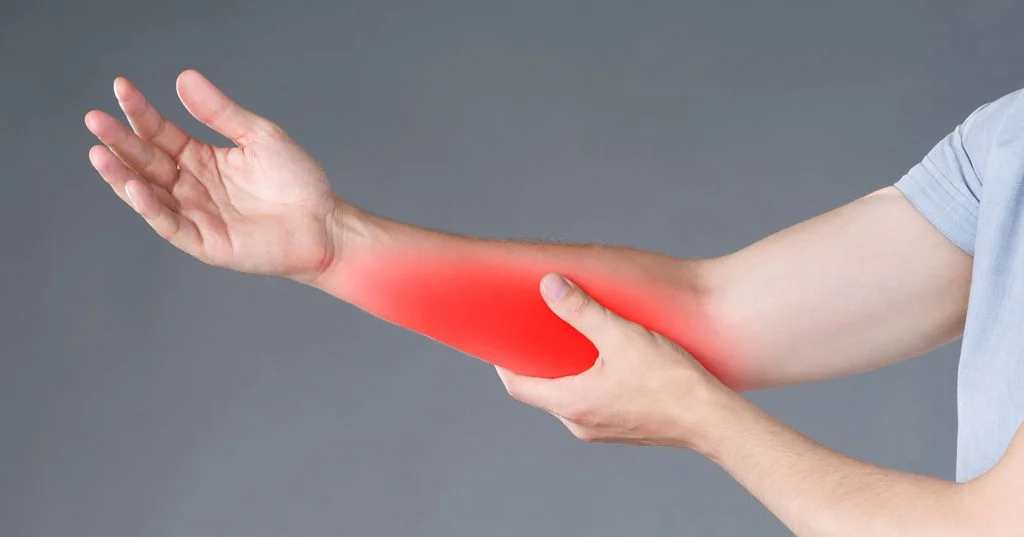
| Along the forearm | Flexor overload / median nerve |
| Wrist and forearm | Overtrained flexors / grip |
Normal Discomfort vs. Warning Sign
Not everything you feel is an injury. This is the quick way to classify it:
| Sign | What it means | What to do |
|---|---|---|
| Diffuse ache that fades as you warm up | Normal load | Train, but watch the volume |
| Ache that shows up afterwards and clears in 24-48h | Mild overload | Hold volume, don't increase |
| Sharp, localized pain getting worse set by set | Irritated tendon | Cut volume by 30-50% |
| Electric twinge as soon as you hang | Inflamed tendon | Stop pull-ups this week |
| Tingling or loss of grip strength in the fingers | Possible nerve involvement | See a professional |
The practical rule: load fades as you warm up, injury gets worse with every set. If it hurts more at the end of the session than at the start, you crossed the line for that day.
What to Do if Your Elbow Hurts Doing Pull-Ups
Acute Phase (first 3-7 days)
1. Reduce or eliminate pull-up volume Don't "train through pain." Pain is a signal that the tissue needs to recover. Halving the volume or resting 5-7 days won't ruin your progress.
2. Ice for the first 2 days 10-15 minutes of ice wrapped in cloth, 2-3 times daily on the sore area. After day 3, switch to gentle heat before training.
3. Anti-inflammatories (optional) Ibuprofen or naproxen under medical guidance can reduce acute inflammation. Don't use them to mask pain and keep training.
4. Gentle isometrics before eccentrics In the first days, a very irritated tendon usually tolerates a sustained contraction better than a slow lowering. Hang with your feet on the ground (or hold a band) and keep moderate tension for 20-30 seconds, 3-5 times, in a range that doesn't hurt. If it stings, reduce the tension, not the time. Once that's pain-free, move on to eccentrics.
Recovery Phase (weeks 2-4)
5. Biceps tendon eccentrics Lower from the bar very slowly (5-8 seconds on the eccentric). Slow eccentrics are the most evidence-backed protocol for inflamed tendons. 3 sets of 5 reps with very little load.
6. Strengthen the forearm extensors Flexors tend to be overdeveloped relative to extensors. Add wrist extensions with a band or light dumbbell: 3×15 with the palm facing down.
7. Train pronation and supination Hold a light dumbbell (or a hammer by the handle) with your elbow tucked to your side and rotate the palm up and down slowly: 3×12 per side. It's exactly what your forearm does in every pull-up, and almost nobody trains it in isolation.
8. Cross-friction massage on the tendon With the elbow slightly bent, massage perpendicular to the tendon for 2-3 minutes before training. It improves local circulation.
Return to Training
9. Start with active hangs Before pull-ups, practice active dead hangs for 20-30 seconds. They activate the shoulder stabilizers and prepare the elbow tendons.
10. Gradual volume progression Return with 50% of your previous volume. Add only 1-2 sets per week. Tendons need 2-3 weeks longer than muscles to adapt.
11. Change your grip temporarily A supinated grip (palms facing you) loads the biceps more. A neutral grip (palms facing each other) is usually gentler on the medial elbow. Try rings or neutral bars.
Your Equipment Matters: Rings and Grip
A fixed bar forces your wrist and elbow into a locked position for the whole range of motion. Rings rotate freely, so your forearm can pronate and supinate naturally as you pull. For many people with medial pain, switching to rings (or a neutral grip) reduces the pain immediately, without touching the rest of the plan.
Three adjustments that cost nothing and usually show up within a week:
- Thumb outside the bar instead of wrapped around it: lowers flexor tension.
- No aggressive lockout at the bottom: extend the elbow under control instead of dropping into the end range.
- Loose wrist wraps, or none at all: cranking them tight compresses the forearm and worsens nerve-type symptoms.
How Long It Takes to Heal
| Phase | Typical duration | Sign you can move on |
|---|---|---|
| Acute (calm it down) | 3-7 days | No pain hanging with feet supported |
| Controlled loading | Weeks 2-4 | Slow eccentrics with no next-day pain |
| Progressive return | Weeks 4-8 | Normal sets, no discomfort, for 2 straight weeks |
A tendinopathy caught early usually responds in 3-6 weeks. One you've been dragging for months while "training through it" can take several months. That difference is exactly why it pays to cut volume early rather than late.
Mistakes That Make Elbow Pain Worse
- Ignoring the pain and training at the same volume: turns mild tendinitis into a chronic problem.
- Aggressively stretching an inflamed tendon: in the acute phase, stretching can worsen the micro-inflammation.
- Aggressive lockout at the bottom: snapping the elbow straight on the descent puts an impact through the tendon.
- Over-tight wrist wraps: they can compress vessels and nerves in the forearm.
- Resting completely until "nothing hurts at all": total rest deconditions the tendon. What heals it is controlled load, not the absence of load.
- Jumping straight back to your old volume the moment it stops hurting: that's the number one cause of relapse.
When to See a Doctor
Consult a physiotherapist or sports doctor if:
- The pain has lasted more than 4 weeks without improving
- There's visible swelling in the elbow
- You feel tingling or numbness in your fingers
- The pain appears at rest (not just when training)
Prevention: How Not to Get This Pain Again
The 10% rule: don't increase pull-up volume by more than 10% per week.
Pull-up warm-up:
- Wrist circles: 10 each direction
- Light band elbow flexions: 15 reps
- Active hang: 2×20 seconds
- Scapular retractions on the bar: 2×10
Balance pulling and pushing: if all you do is pull-ups and rows, the imbalance eventually shows up in your elbow and shoulder. Add push-ups or dips in the same week.
Watch the spikes: the pain almost never comes from the session where it appears, but from last week's jump in volume. Pull-up plans ramp up fast; if you're following one, respect its deload weeks instead of skipping them (8-week pull-up program).
Track your volume: knowing your total weekly reps helps you spot when you're ramping up too fast. On Reppy you can review your training history and avoid the volume spikes that cause injuries.
Frequently Asked Questions
Can I keep training other things? Yes. Legs, core and gentle pushing usually don't load the affected tendon. What you need to cut is pulling volume, not your whole training.
Are chin-ups worse? They load the biceps and the common flexor more, so with medial or distal biceps pain they usually feel worse. A neutral grip is the friendliest option while you recover.
Do epicondylitis straps work? They can relieve symptoms by redistributing tension, but they don't fix the cause. Use them as a temporary crutch while you do the progressive loading work, not as the solution.
What if it only hurts the next day? That's the classic volume-overload pattern. Hold the same volume for two weeks without increasing it; if it fades, you've found your current tolerance ceiling.
Can I do grease the groove with elbow pain? Only if the sets are clearly pain-free and nowhere near failure. Dosed well it spreads the load instead of concentrating it (grease the groove); dosed badly it's just extra volume in disguise.
When can I test my max again? Once you've trained normal sets for two weeks with no discomfort, including the day after. Testing a max on a half-healed tendon is the most common way to relapse.
Elbow pain from pull-ups is preventable and treatable. The key is listening to your body, managing volume, and not ignoring warning signs. And if you want to clean up the technique that usually sits behind the overload, start with the ultimate pull-up guide.